Overview
As winter transitions to spring each year, warmer temperatures, stronger sunlight, and the shift from snow to rain create a new set of mountain hazards. Though the threat of avalanches begins to decrease, these springtime hazards are just as dangerous and have contributed to hundreds of accidents and near-misses over the years. Knowing how to identify, plan for, and avoid these hazards can greatly reduce your risk when traveling in the mountains.
Icefall & Rockfall
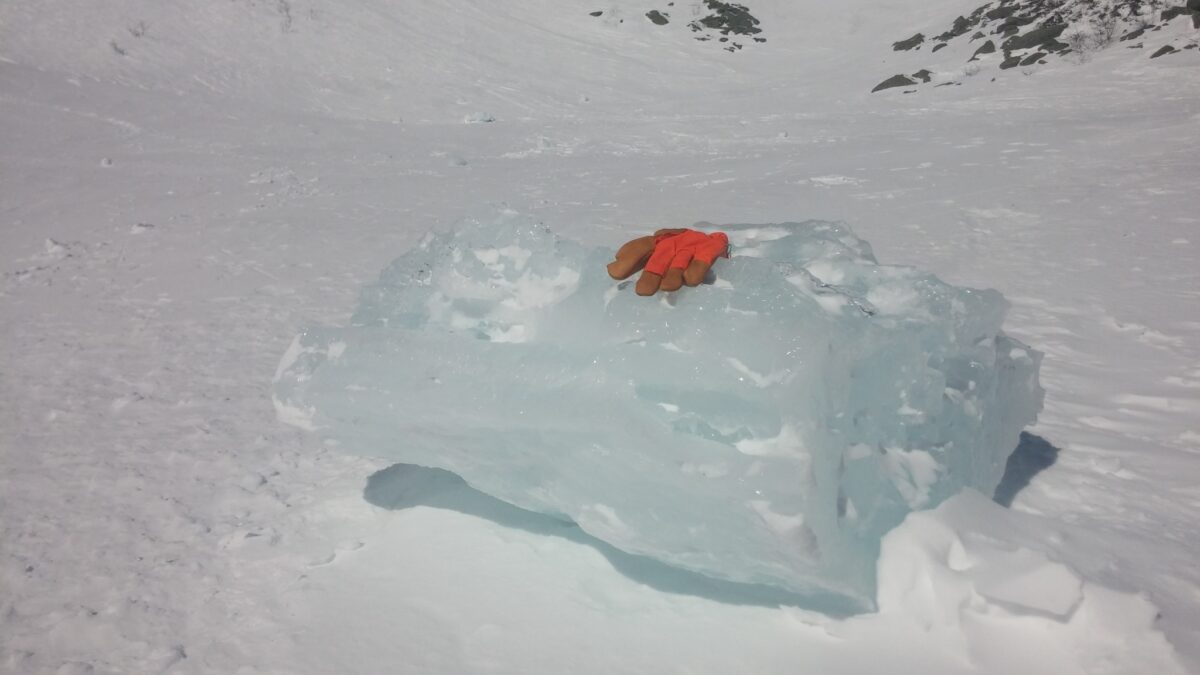
As the mountains experience numerous freeze/thaw cycles, melting ice, and water runoff from snowmelt, falling ice and falling rock are commonly associated phenomena. Falling pieces can range from the size of a golf ball to the size of a car, weighing many tons and reaching speeds over 60 mph. This hazard is difficult to predict and can have deadly consequences for anyone in the fall line.
"Lunch Rocks" is one of the most dangerous places in Tuckerman Ravine in the spring due to icefall exposure, but this hazard is possible anywhere with steep slopes and exposed ice or rock overhead.
Red Flags
- Audible dripping or rushing water on overhead ice or rock faces, indicating active melt and instability.
- Fresh debris (ice chunks or rock fragments) visible on the slope below a cliff band, indicating recent activity.
- Persistently warm temperatures or rapidly rising temperatures, especially combined with direct sunlight.
- Other parties traveling above you on ice or rock, as their movement could trigger a release.
Identification & Mitigation
- Ice may appear blue or white and be vertical in steepness. Cracks can often be seen or heard with warming.
- Periods of rapid warming and heavy rainfall are the most likely times for icefall and rockfall, but releases are ultimately unpredictable.
- Minimize time spent underneath ice and on slopes where others travel above you on rock or ice.
- Wear a helmet in steep terrain.
Examples
Glide Cracks & Snow Holes
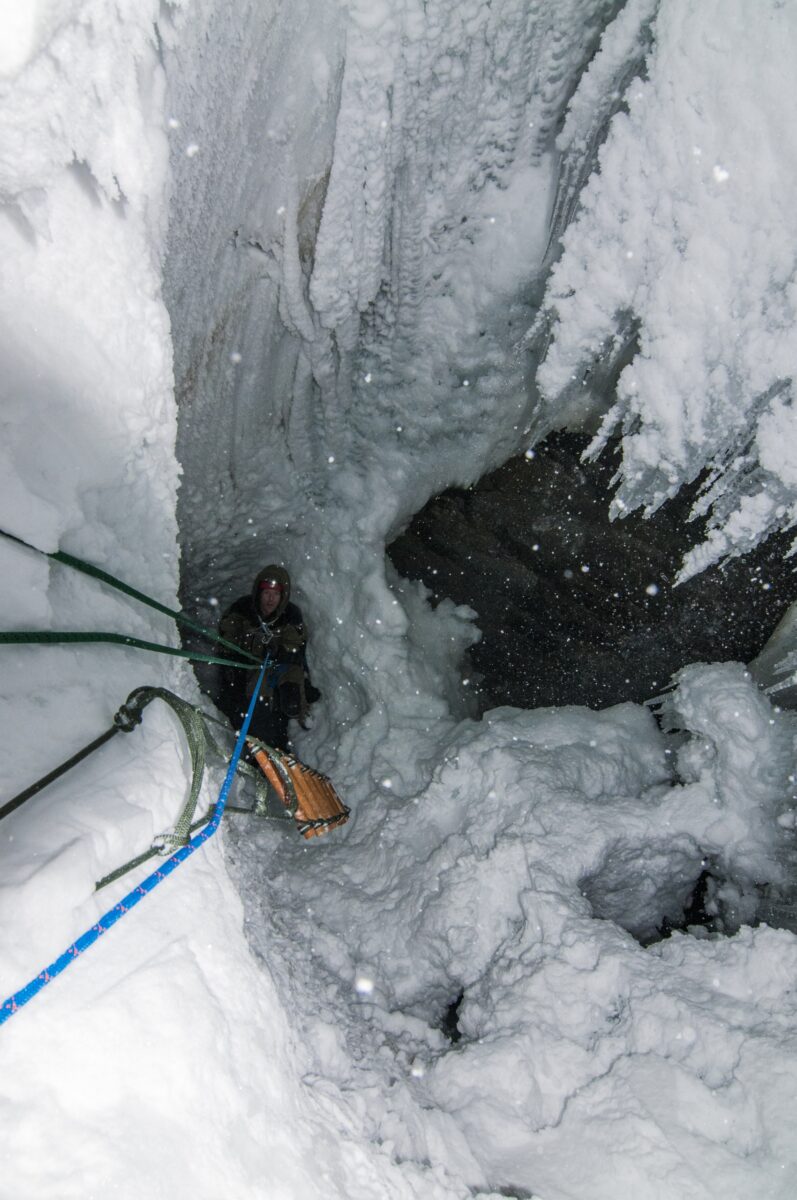
As warm temperatures, rain, and water runoff continuously melt snow during spring, it is common for large and deep holes and cracks to form in the snowpack. These form through concentrated water runoff, snow becoming undermined from below, and from snowpack creep and separation. These openings can be very deep and large enough for a person to fall into, and in most cases there is no reasonable exit until the snow completely melts.
Sometimes resembling crevasses found on glaciers, these features have been a factor in several serious accidents over the years.
Red Flags
- Extended periods of above-freezing temperatures or rain, prime conditions for rapid formation.
- Audible concentrated water rushing or falling nearby, indicating active drainage cutting through the snowpack.
- Unusual dark shadows, depressions, or pits appearing in steep terrain you passed earlier in the season without issue.
- Cracking or settling sounds underfoot near rocky terrain or drainage gullies.
Identification & Mitigation
- Glide cracks appear as horizontal lines in the snowpack, visible from a distance. Keep your distance, as surrounding snow can be weak and connected to the crack.
- Deep holes often appear as depressions in the snowpack, commonly found next to or below rock buttresses and boulders where water collects.
- During route planning, identify where these could form and plan to avoid them. Traveling above these features increases fall consequences.
- Fresh unsupportive snow can mask the openings, making them invisible from the surface.
Examples
Refrozen Snow Surfaces
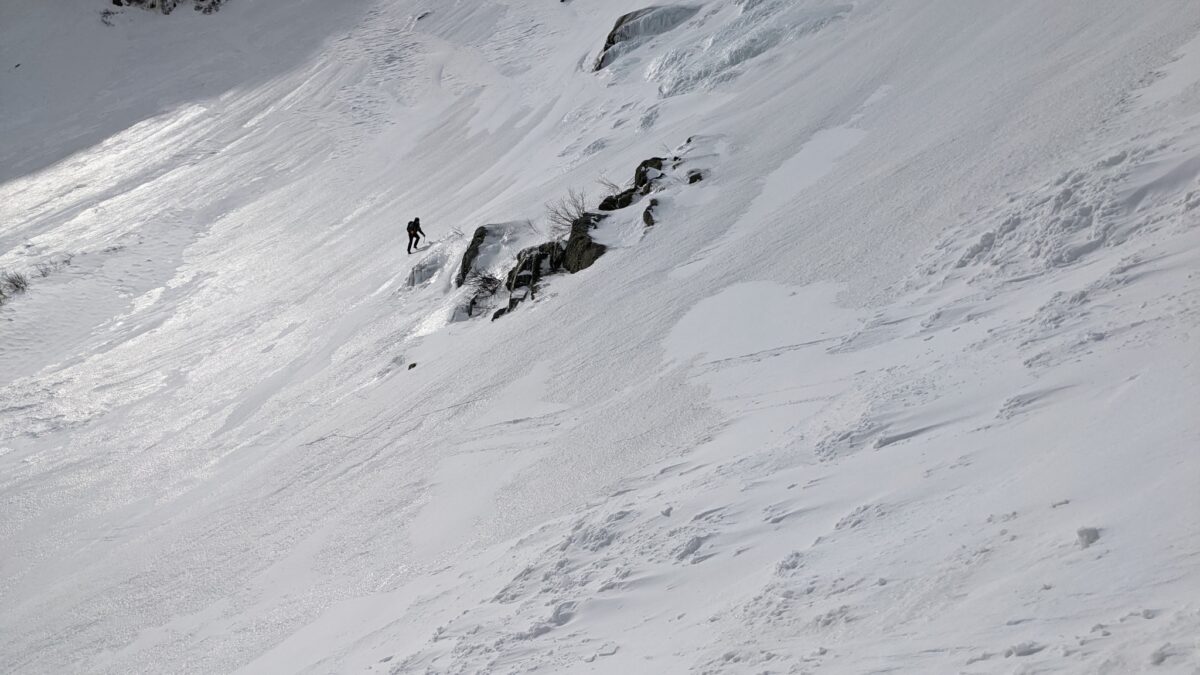
Spring snowpacks experience regular melt/freeze cycles. Dramatic temperature fluctuations affect snowpack hardness as temperatures rise above and fall below freezing. Intense sunshine can have a similar effect, softening snow when exposed to sun and refreezing it when shaded.
When refrozen, the snow surface becomes very hard, icy, and slippery. In steep terrain, a fall can be impossible to stop or steer, and high-speed, long-sliding falls are a contributing factor in many accidents and near-misses every year.
Red Flags
- Cooling temperatures after a thaw or shade on a previously sunny slope.
- Boots or skis with little or no penetration into a hard, icy snow surface.
- The snow surface sounds glassy or hollow when tapped with a pole.
- A slope that was previously soft and is now glazed over or hardened after cooling temperatures.
Identification & Mitigation
- Hard snow with little or no boot penetration and a shiny, reflective surface are sure signs of refrozen snow.
- Predict this hazard by checking temperature forecasts and evaluating sun exposure timing on different aspects.
- Specialized mountaineering equipment is essential: boot crampons, ice axe, ski crampons, and sometimes a rope system.
- Be aware of the limitations of self-arresting with an ice axe on hard, refrozen surfaces.
Examples
Undermined Snow
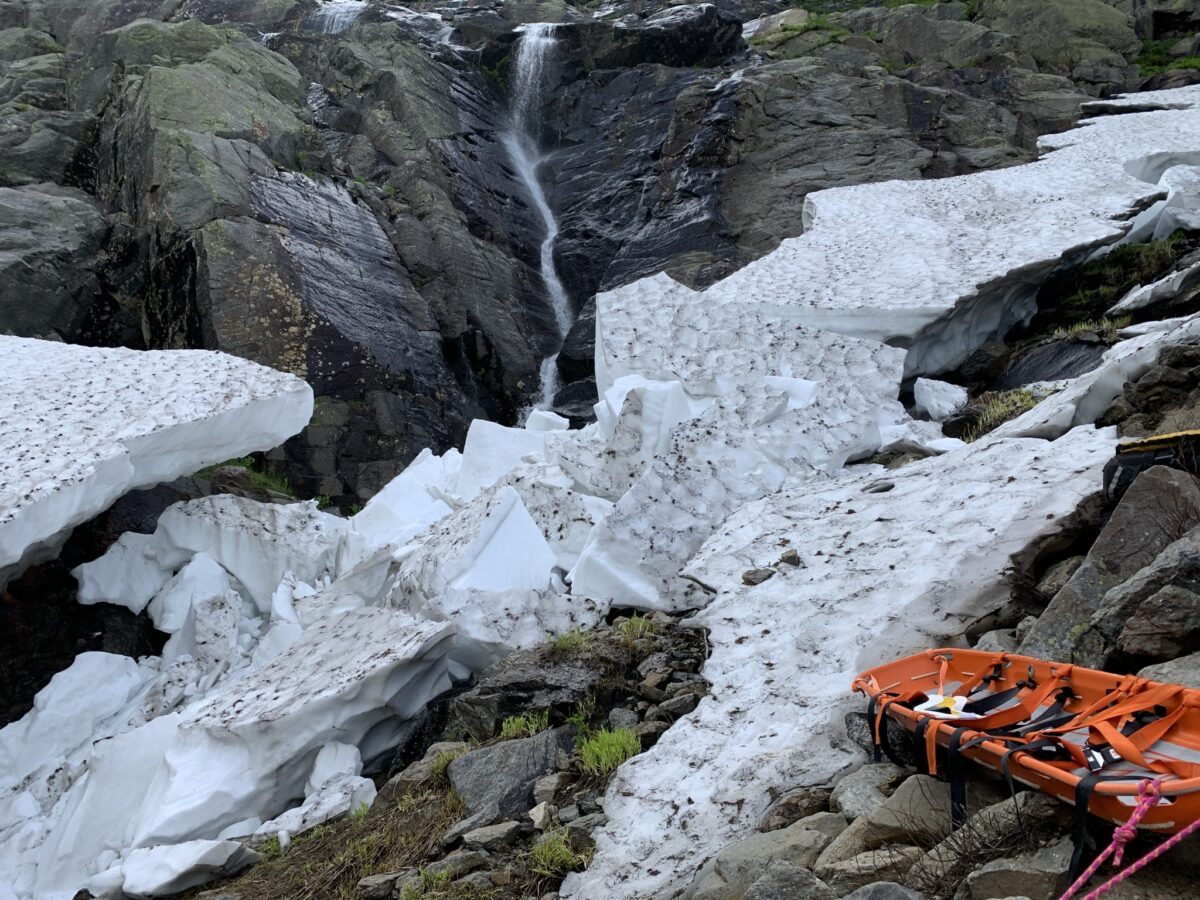
As water runoff increases during spring, it directly melts adjacent snow and introduces warm air underneath, further accelerating the melting process. Over time, this undermines the snow from below. Collapses can happen suddenly, or a bridging effect may hold the weight of suspended snow for an extended period before failing.
This hazard commonly forms where rivers, small streams, or runoff areas exist. A snow bridge could collapse on the first boot track or the 500th, and they can even collapse spontaneously.
Red Flags
- Visible sagging or a convex bulge in the snow surface over a drainage channel or streambed.
- A route or crossing that felt solid in the morning may be significantly weaker by afternoon as daily melt accelerates runoff.
- The tone underfoot shifts from solid to hollow as you step. Stop immediately and back off.
- Late season (April and beyond) when snowmelt runoff increases significantly.
Identification & Mitigation
- Look, listen, and feel for this hazard. Sometimes undermined snow is visible, sometimes invisible from the surface.
- Listen for running water underneath the snow as a key indicator.
- Use a probe or pole to investigate snow depth and strength before committing to travel on it.
- Give obvious or suspected areas a wide margin. The timing of failure is unpredictable.
Examples
Wet Avalanches
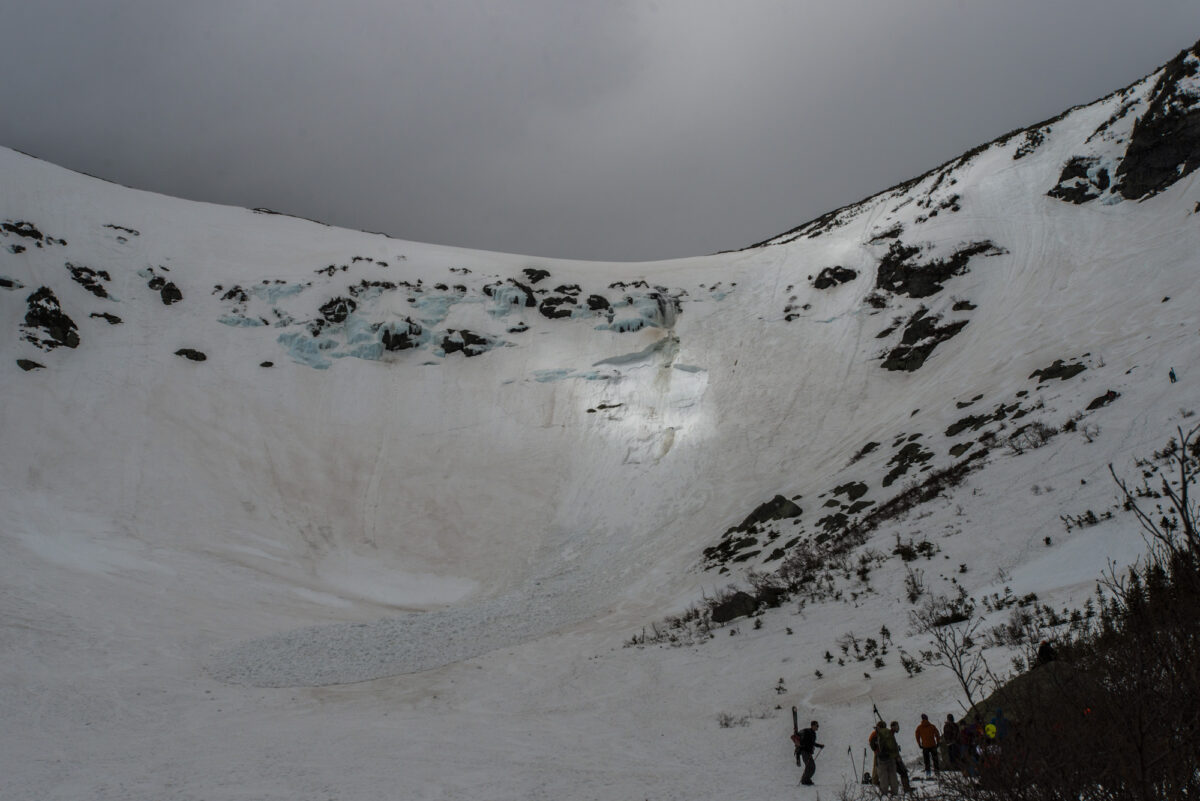
Wet avalanches occur when free water decreases the strength of the snow. They can occur as a cohesive slab or as loose, saturated snow struggling to stick to the surface. Though these avalanches typically move slower than dry snow avalanches, the heavy weight of saturated snow makes them very powerful and sometimes difficult to escape.
As spring progresses, regular loose wet avalanches and sluffs eat away at the snowpack and create deep runnels or trenches, adding an additional obstacle for skiers and climbers.
Red Flags
- Rain falling on snow, especially on a previously dry snowpack — free water degrades strength rapidly.
- Snowballs or pinwheels rolling spontaneously on steep slopes, or wet debris visible at the base of a run.
- Corn snow that has turned to mush and can no longer support your weight — the snowpack is saturated.
- Afternoon hours after prolonged strong sun, when solar radiation has had time to penetrate deep into the snowpack.
Identification & Mitigation
- Read the avalanche forecast and general bulletin for updated information about when and where to expect these avalanches.
- Conduct snowpack assessments to investigate the presence or potential for this avalanche problem.
- Look for melting snow, rain, or strong solar radiation as warning signs.
- Expect loose wet avalanches to have significant power when moving across your path; try to avoid the main flow.